
EbA Module
Learn the fundamentals of Ecosystem-based Adaptation (EbA) and how to apply it in practice
Photographer: José Manuel Ramírez Brenis
What is Ecosystem-based Adaptation - EbA?
Ecosystem-based Adaptation (EbA) is defined by the Convention on Biological Diversity (CBD) as: “the use of biodiversity and ecosystem services as part of an overall strategy to help people adapt to the adverse effects of climate change.” EbA protects, restores, and/or manages ecosystems such as mangroves, forests, wetlands, and coral reefs to reduce climate risks and support human well-being.
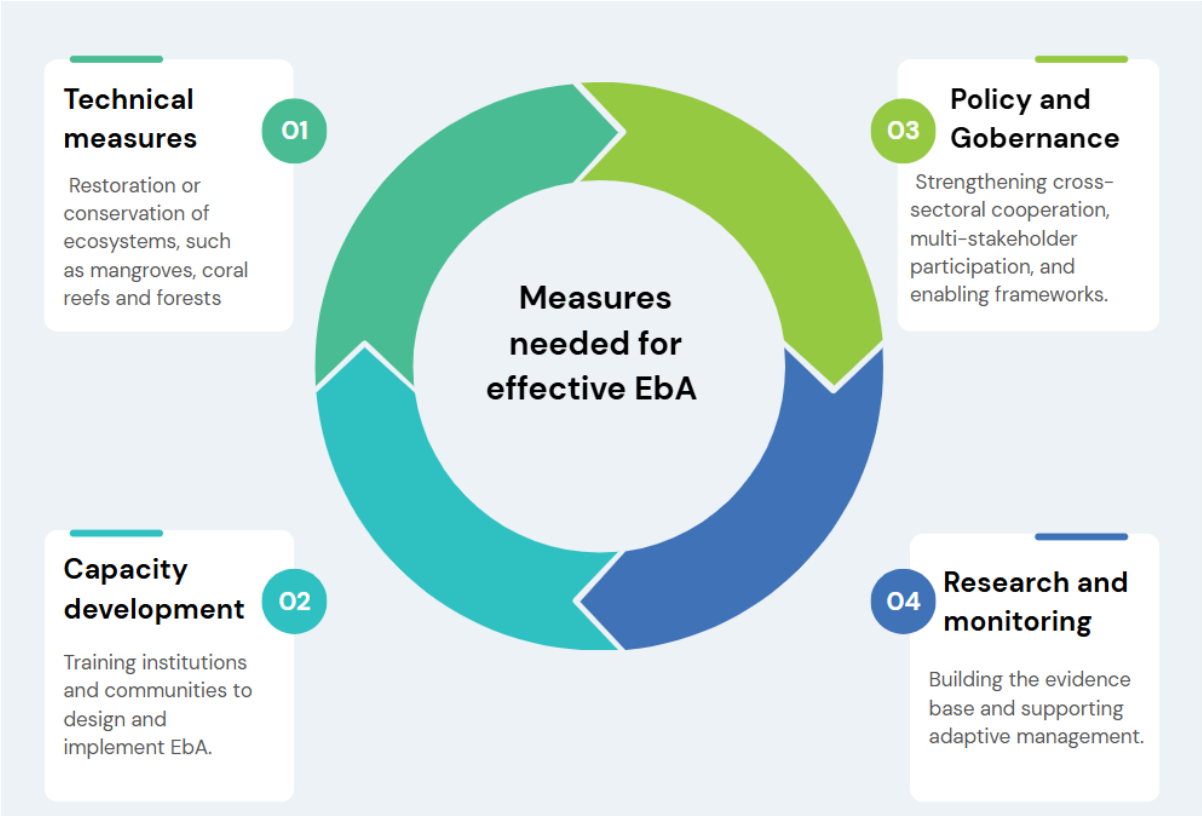
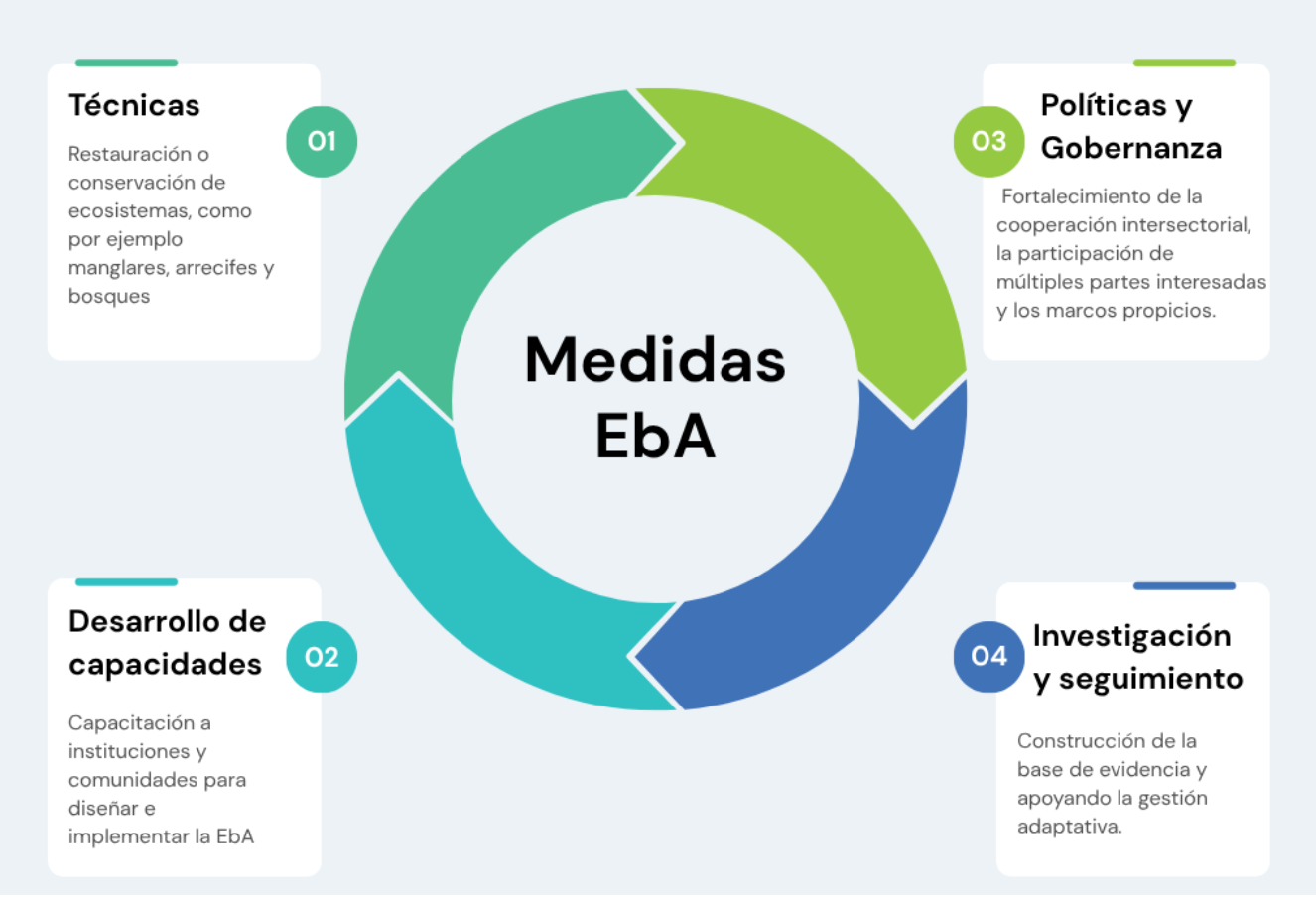
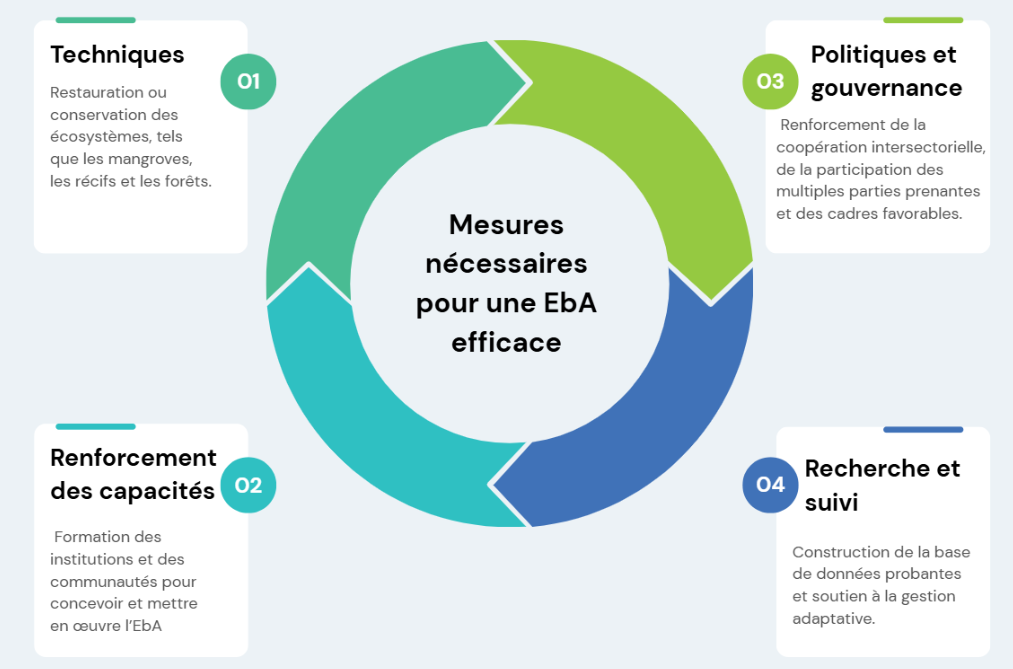
Types of EbA measures
In practice, to be effective, EbA usually combines different types of complementary actions:
Key elements of a good EbA design
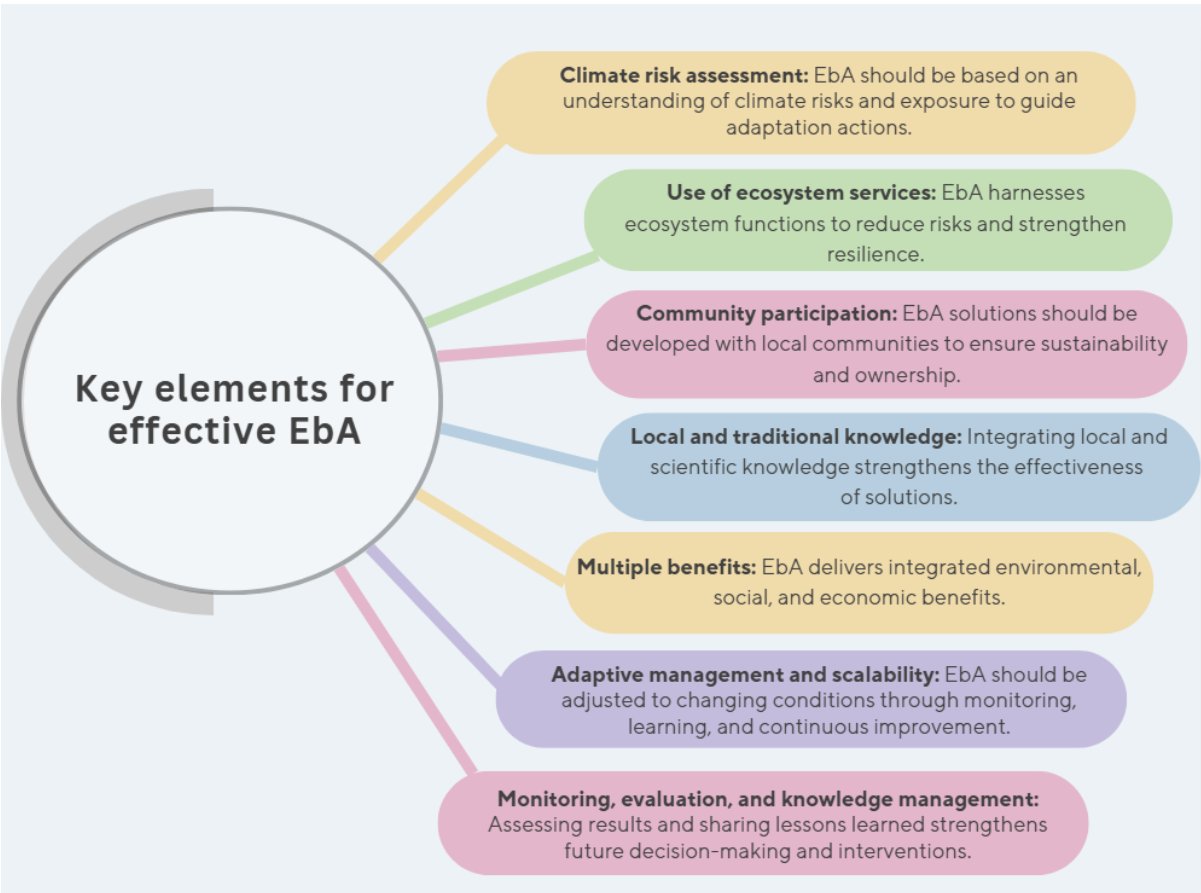
EbA requires careful planning and the integration of ecological, social, and political dimensions. A well-designed EbA approach ensures that ecosystems provide climate resilience, biodiversity benefits, and long-term sustainable livelihoods.
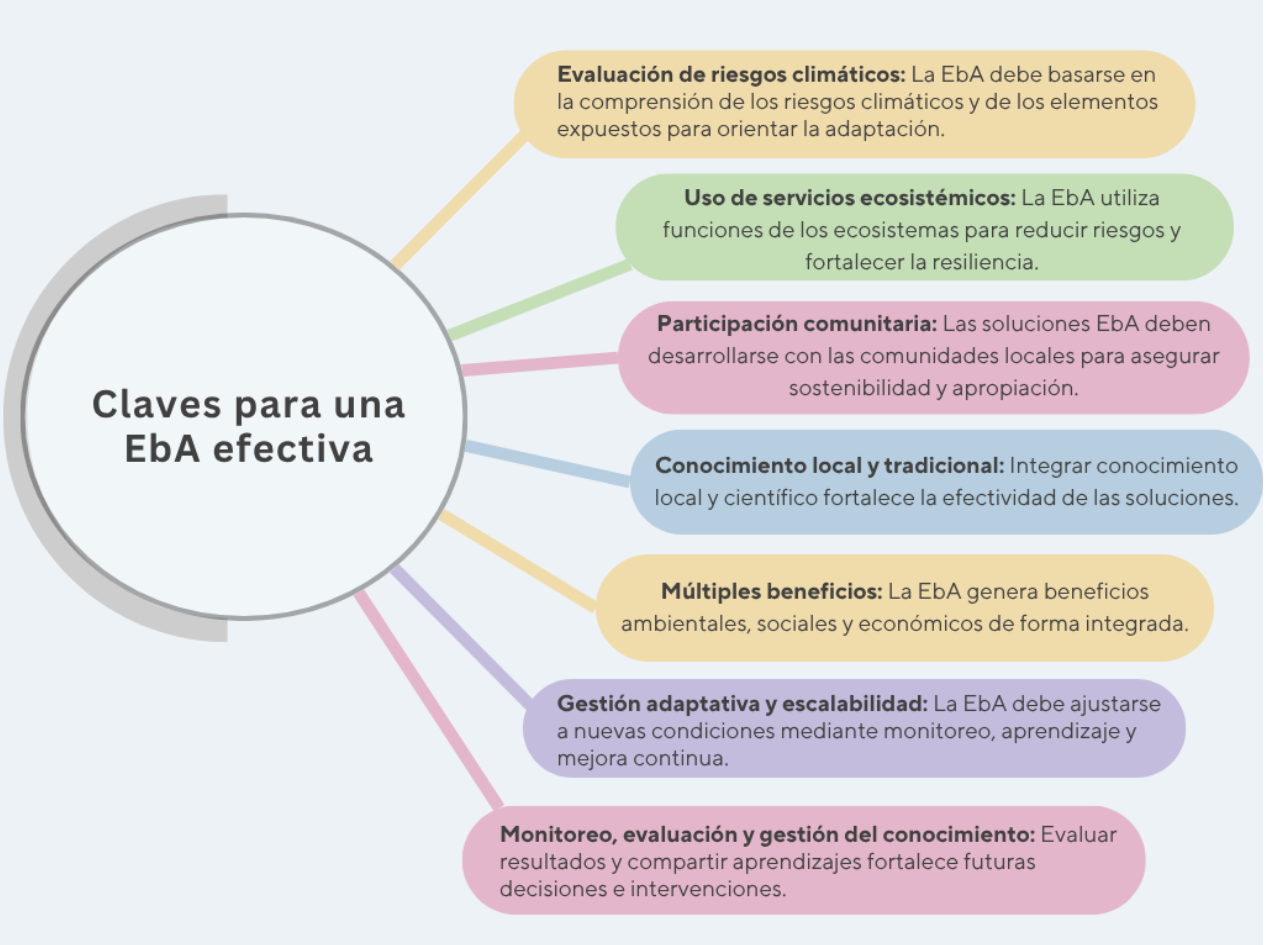
Monitoring the progress and changes resulting from EbA actions is essential for assessing their effectiveness and guiding continuous improvement. This process should include ecological indicators (e.g., vegetation cover, species richness, and soil quality), socioeconomic indicators (e.g., community access to resources, livelihoods, and social inclusion), and climate risk indicators (e.g., frequency and severity of hazards).
Tools such as remote sensing, GIS mapping, and field survey data can support information gathering. Effective knowledge management is essential to ensure that lessons learned, best practices, and local knowledge are documented, shared, and used to inform future decision-making at both the local and political levels.
According to the CBD, IUCN, and UNEP, the following elements are key to designing and implementing effective EbA:
The following resources offer practical guidance, tools, and international standards to support the design and implementation of EbA approaches:
- CBD Voluntary Guidelines (2018 ): Practical guidance for the design and implementation of EbA and ecosystem-based disaster risk reduction (Eco-DRR).
- UNEP Guidelines for integrating EbA into NAPs (2021): Comprehensive supplement to the UNFCCC Technical Guidelines for National Adaptation Plans (NAPs).
- FEBA EbA Qualification Criteria and Quality Standards (2017/2022): Practical assessment tool that defines what constitutes high-quality EbA.
- IUCN EbA Resources: Guide and case studies on nature-based solutions for climate adaptation and resilience.
Climate and ecosystem risks addressed by EbA in the Caribbean
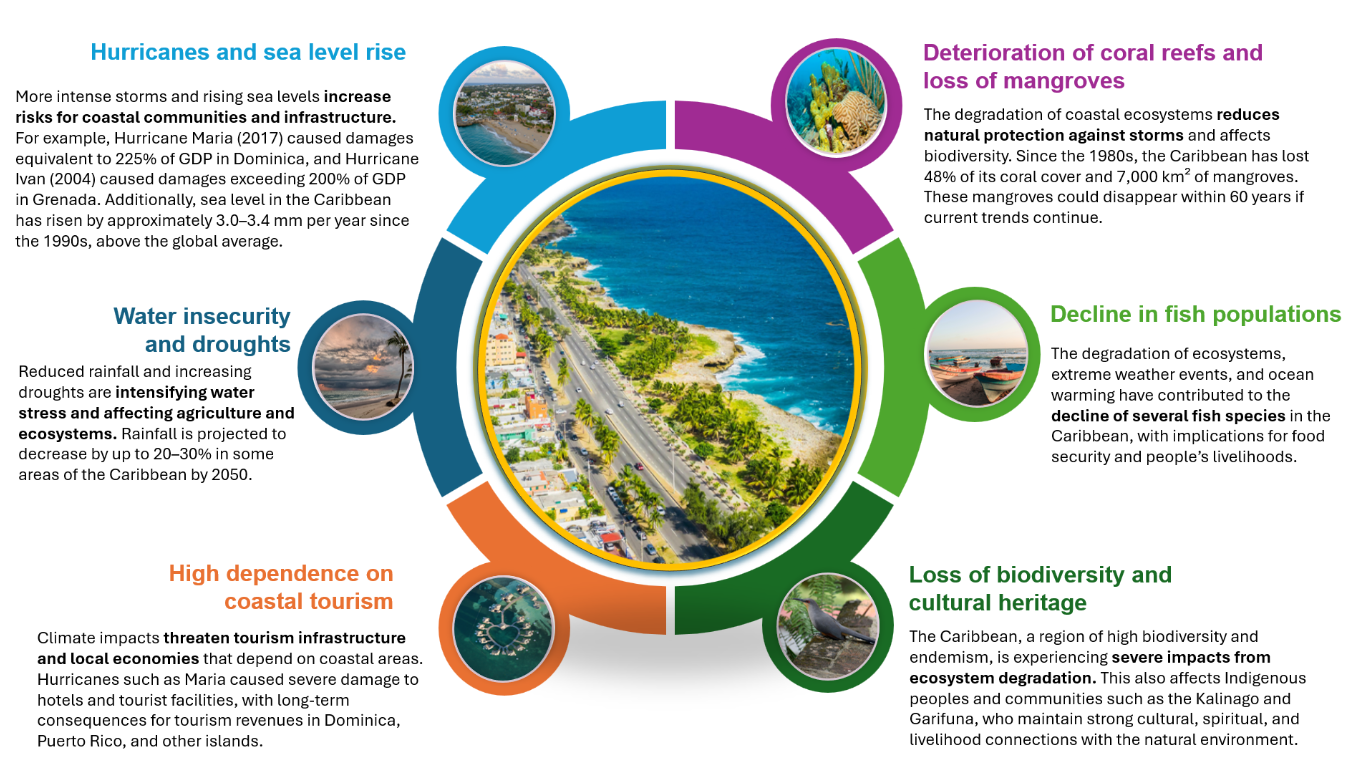
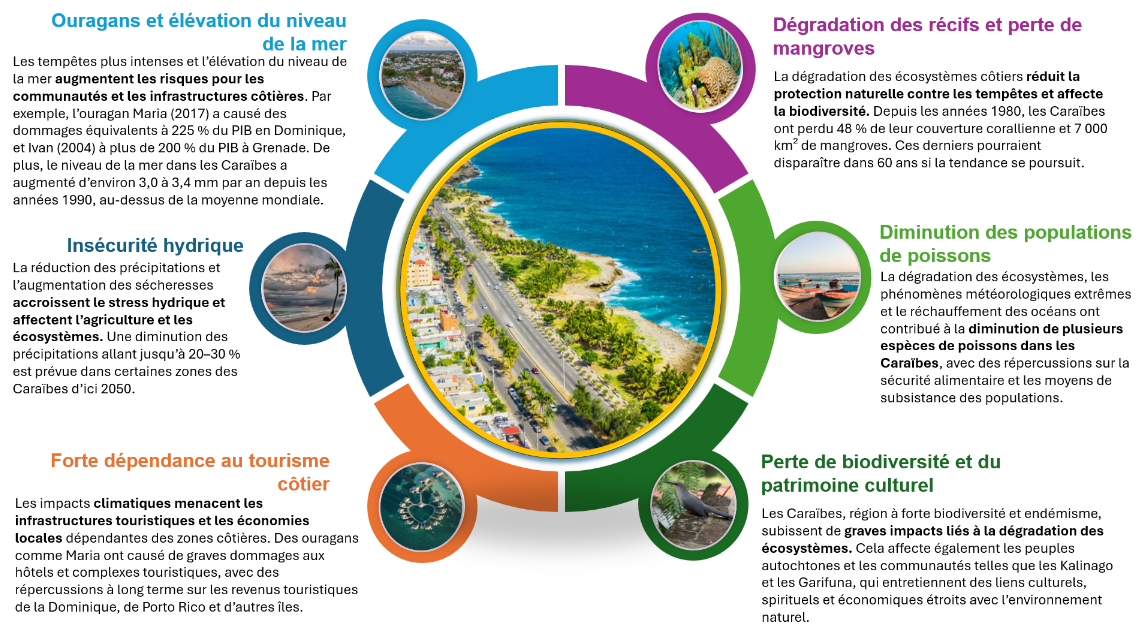
The following climate and ecosystem challenges are particularly relevant in the Caribbean:
Why is EbA important in the Caribbean?
Although the Caribbean contributes minimally to global greenhouse gas emissions, it is one of the regions most vulnerable to climate change. Small island states face more intense hurricanes, rising sea levels, and changes in rainfall patterns. These changes lead to impacts such as coastal erosion and the loss of coral reefs.
It is estimated that the economic damage could increase from 5% of regional GDP in 2025 to more than 20% by 2100 if urgent action is not taken.
Additionally, the region’s economies depend heavily on tourism, fishing, and coastal infrastructure, which increases vulnerability to these climate impacts.
Given this combination of high exposure and ecological dependence, EbA is particularly relevant in the Caribbean. It offers a way to strengthen resilience by working with natural systems that already provide protection, livelihoods, and ecosystem services.
What does EbA look like in practice?
EbA is applied in different ways depending on the ecosystem and local context, aligning natural processes with climate adaptation needs, reducing climate risk while supporting livelihoods and biodiversity. For example, mangrove restoration can reduce wave energy during storms while supporting local fisheries and incomes. In mountainous or headwater areas, forest restoration helps stabilize soils, reduce landslides, and regulate water flow, thus decreasing the risks of floods and droughts.
Some examples of EbA in practice include:
- Mangrove restoration: Mangroves reduce storm surges and coastal flooding by acting as natural barriers. During a major hurricane in Florida, mangroves reduced the flooded area by approximately 1,800 km². In the Caribbean, mangrove restoration projects (for example, in Belize and Cuba) have been shown to significantly reduce wave energy and protect coastal communities and infrastructure during hurricanes.
- Reforestation in upland watersheds: Reforestation helps regulate water flow, reducing flood peaks during heavy rains and maintaining water availability during dry periods. In Caribbean Island contexts, such as the Dominican Republic and Jamaica, watershed restoration is widely used to protect the water supply for downstream communities and agriculture.
- Wetland conservation and restoration: Wetlands absorb excess rainfall and reduce the risk of flooding, while also improving water quality by filtering sediments and pollutants. In Caribbean coastal lagoons and inland wetlands, conservation and restoration efforts help mitigate the impact of storms and improve the health of surrounding ecosystems. Other case studies have shown that wetland filtration processes remove multiple pollutants.
- Coral reef restoration: Healthy reefs reduce wave energy before they reach the shore and support fisheries on which many Caribbean communities depend. Studies in the Caribbean have shown that reef degradation can significantly increase exposure to coastal flooding, while restored reefs improve shoreline protection and fish habitat recovery.
- Increased urban green spaces: Urban green spaces reduce heat in cities and improve climate comfort. A spatial analysis revealed that green spaces significantly decrease land surface temperatures, showing measurable cooling effects.
- Climate-resilient agricultural practices: Practices such as agroforestry, mulching, and cover crops improve soil moisture retention, reduce erosion, and increase resilience to droughts and irregular rainfall. In rainfed farming systems in the Caribbean, these practices are increasingly used to ensure food security amid climate stress.
Across different ecosystems and interventions, EbA is grounded in common principles, including reducing vulnerability, generating social benefits, restoring ecosystem health, integrating with policies, and supporting inclusive governance. These principles are reflected in frameworks such as FEBA’s criteria and quality standards for EbA, which guide practitioners in the effective implementation of climate change adaptation strategies, helping to avoid maladaptation and promote sustainable development.
Why consider EbA in projects and policies?
EbA is a cost-effective and sustainable approach that generates environmental, social, and economic benefits. A single intervention can generate multiple benefits. For example, watershed restoration can reduce flooding, improve water quality, support biodiversity, and strengthen livelihoods.
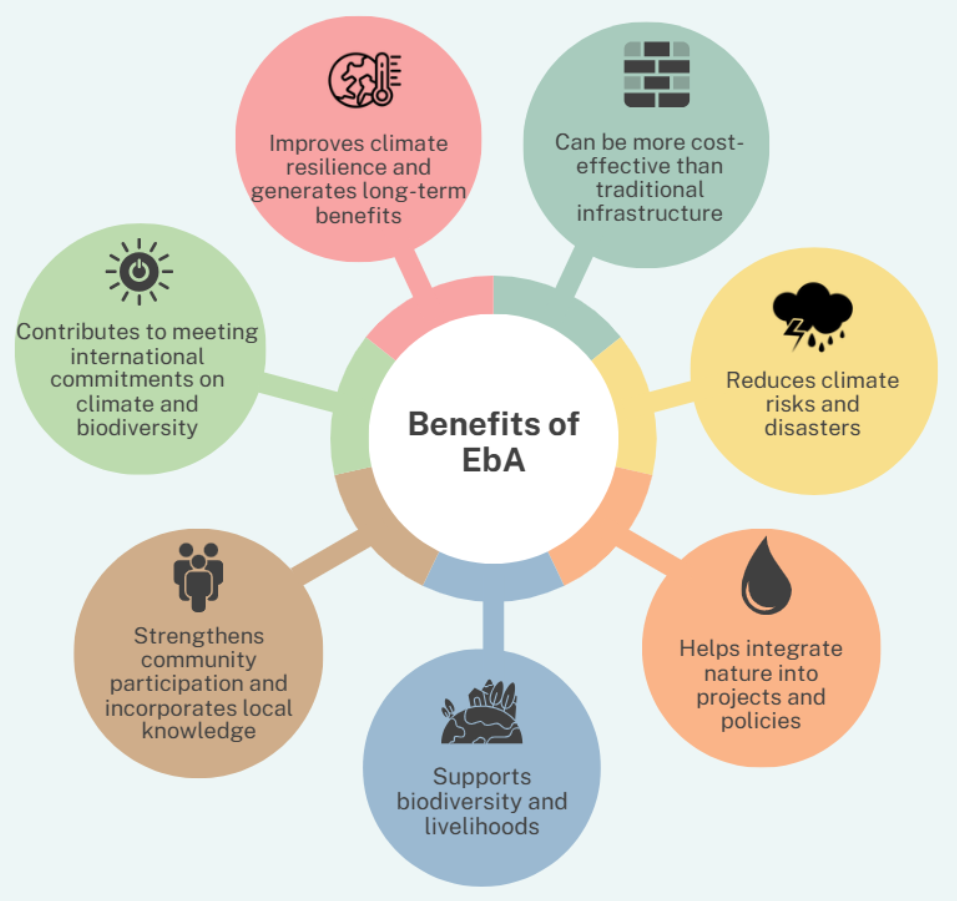
The main benefits of EbA include:
- Cost-effectiveness: EbA, as a type of nature-based solutions, can be more affordable than traditional engineered infrastructure, while offering a wide range of environmental and social benefits.
- Multiple benefits: A single intervention, such as watershed restoration, can simultaneously reduce flood risk, improve water quality, store carbon, promote biodiversity, and enhance livelihoods.
- Climate resilience: Healthy ecosystems reduce exposure to climate hazards and increase system recovery after disturbances.
- Disaster risk reduction: Mangroves, forests, and wetlands act as natural barriers against extreme weather events, such as storms, floods, droughts, and heat waves, reducing both the frequency and severity of climate-related losses.
- Social equity and community participation: EbA often involves local and indigenous communities, their practices and local knowledge, strengthening participation and livelihoods.
- Long-term sustainability: Restoring ecosystems provides lasting benefits by strengthening ecosystem health and improving community resilience to climate disturbances over time.
- Integrating nature into planning: EbA in projects and policies helps planners, engineers, and policymakers think systemically about nature and long-term sustainability. Integrating nature into policies and projects allows them to better access the growing pool of climate finance.
- Alignment with global frameworks: EbA projects help countries that are Parties to the Paris Agreement, the Kunming-Montreal Global Biodiversity Framework, and the UN Sustainable Development Goals (SDGs) to integrate climate and nature actions. EbA contributes directly to achieving the objectives of all these frameworks, helping countries meet their international obligations.
Evidence base and key resources
Evidence on EbA’s role in reducing climate risk, improving resilience and supporting sustainable development is supported by a growing body of global assessments and technical guidelines:
- Global Commission on Adaptation (2019), “Adapt Now: A Global Call for Climate Resilience Leadership.” https://gca.org/wp-content/uploads/2019/09/GlobalCommission_Report_FINAL.pdf
- UNEP (2021), “Guidelines for integrating ecosystem-based adaptation into National Adaptation Plans (NAPs)”. https://www.unep.org/resources/toolkits-manuals-and-guides/guidelines-integrating-ecosystem-based-adaptation-eba
- IPCC (2022), Sixth Assessment Report – Working Group II: Impacts, Adaptation and Vulnerability. https://www.ipcc.ch/report/ar6/wg2/
EbA in action in the real world
- Caribbean Biological Corridor: An IKI-funded initiative supporting ecosystem restoration and the implementation of EbA in vulnerable rural landscapes. The project has restored and conserved over 2,600 hectares of land, distributed more than 1.7 million fruit and forest tree seedlings, provided support to 1,140 rural households, and improved access to safe drinking water for 695 households. More than 10,800 people have benefited from training and awareness campaigns.
- Caribbean Biodiversity Fund (CBF): It has mobilized and disbursed USD 27.6 million to support 26 projects in 9 Caribbean countries, including multiple mangrove and coastal ecosystem restoration initiatives, demonstrating a growing regional investment in large-scale EbA.
- Mesoamerican Biological Corridor (GEF): A major regional initiative encompassing the Caribbean coastal areas of Central America. It supports forest conservation, ecosystem connectivity, and climate resilience through large-scale landscape restoration and the strengthening of protected areas.
Regional resources and experiences
The platform brings together global and regional resources to support the design and implementation of ecosystem-based solutions and to provide users with quick access to essential guides, tools, and frameworks. For more in-depth, searchable materials, the platform also offers a resource library specialized in the Caribbean context.
Featured resources
- IUCN Resources on Ecosystem-based Adaptation (EbA) and Nature-based Solutions (NbS): Comprehensive collection of guides, tools, and case studies on ecosystem- based approaches to climate adaptation and resilience.
- UNEP Global EbA Fund: Supports innovative EbA projects worldwide and provides practical information, case studies, and lessons learned from their implementation.
- FEBA-EbA Criteria and Standards: Provides a widely recognized framework for defining, evaluating, and designing high-quality EbA interventions, including key principles and quality standards.
- Global Ecosystem-based Adaptation Fund (Global Adaptation Network): It provides access to resources, learning materials and practical guidance to support the design and implementation of EbA initiatives.
- EbA Tools Navigator (NDC Partnership): An interactive tool that helps users identify methodologies, tools, and guides relevant to planning and implementing climate and EbA actions.
- WeADAPT Knowledge Platform: A global collaborative platform that offers case studies, tools, and expert knowledge on climate change adaptation and EbA.
- CARICOAST (Caribbean Coastal Climate Resilience Network): A regional community of practice that shares knowledge, case studies and experiences on coastal adaptation and resilience in the Caribbean.
- PANORAMA – Solutions for a healthy planet: A global platform showcasing replicable solutions, including numerous ecosystem- based and nature-based approaches in different regions.
Explore the resource library
Access tools, case studies, reports and technical guidance on EbA in the Caribbean.
- Resources organized by ecosystem, country or topic.
- Case studies, tools, and multimedia materials.
- Evidence and lessons learned from across the region.