Jamaica
Project Name
Strengthening regional climate resilience and supporting green economic recovery through EbA and sustainable livelihoods
Duration (start -end)
June 2023-June 2026
Location
Oracabessa, St. Mary, Jamaica, West Indies
Intervention area
Responsible implementors and local partners or collaborators
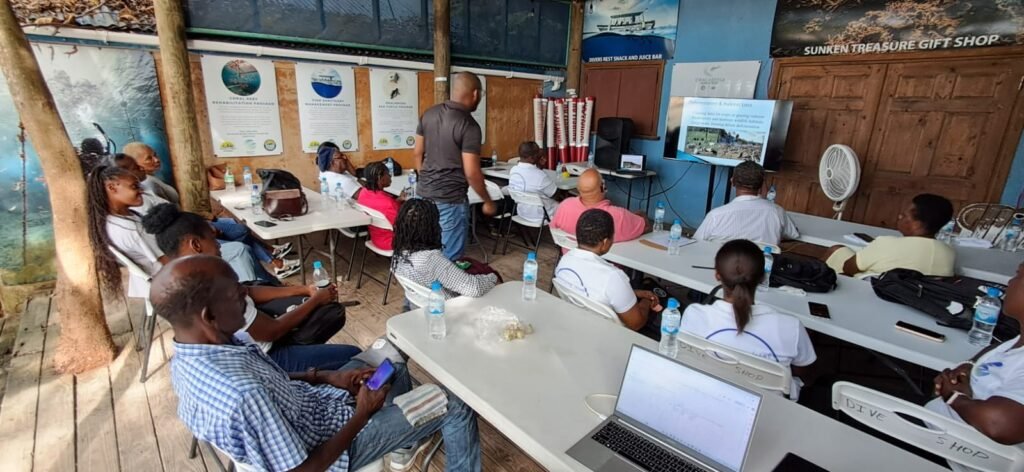
The primary implementor is The Oracabessa Marine Trust; key local partners include The GoldenEye Foundation and The Oracabessa Fishers Association. Other stakeholders include Kees Farms, NFA, NEPA, White River Fish Sanctuary, Discovery Bay Marine Lab, JSIF, NCTFJ, TPDCO
Type of ecosystem addressed
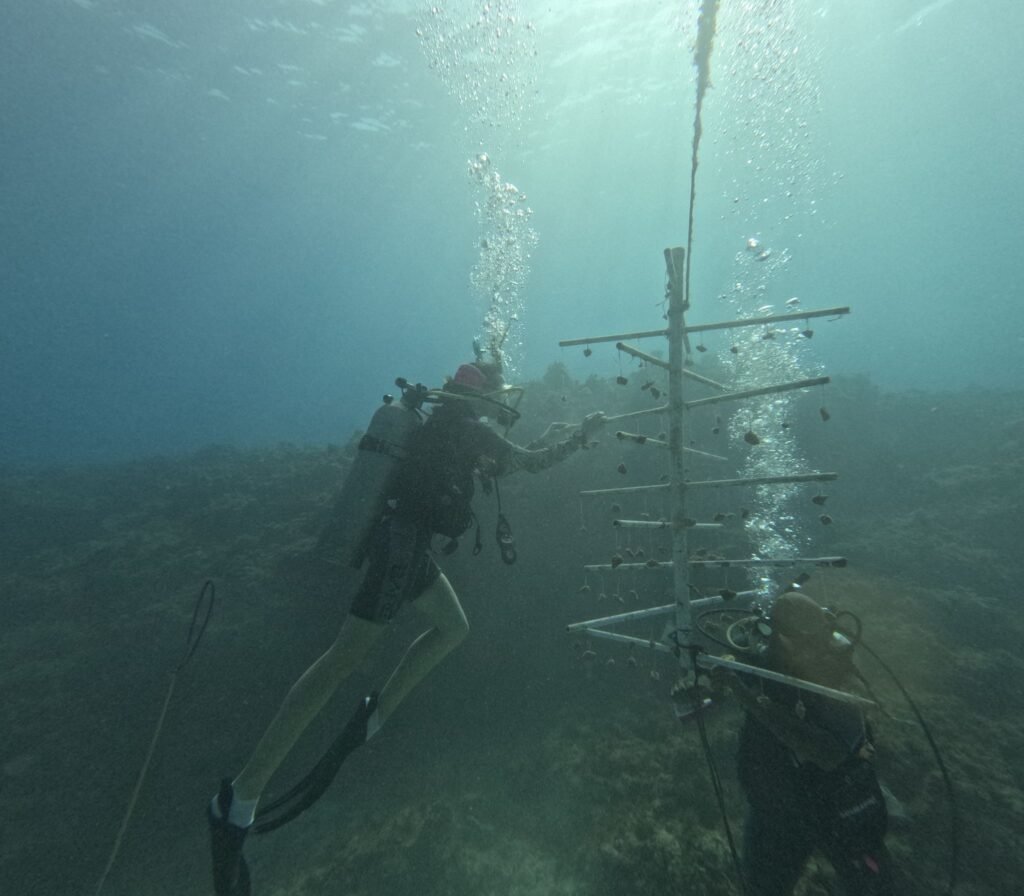
OMT focuses directly on improving the marine ecosystem through restoration of coral reefs
Type of EbA interventions carried out
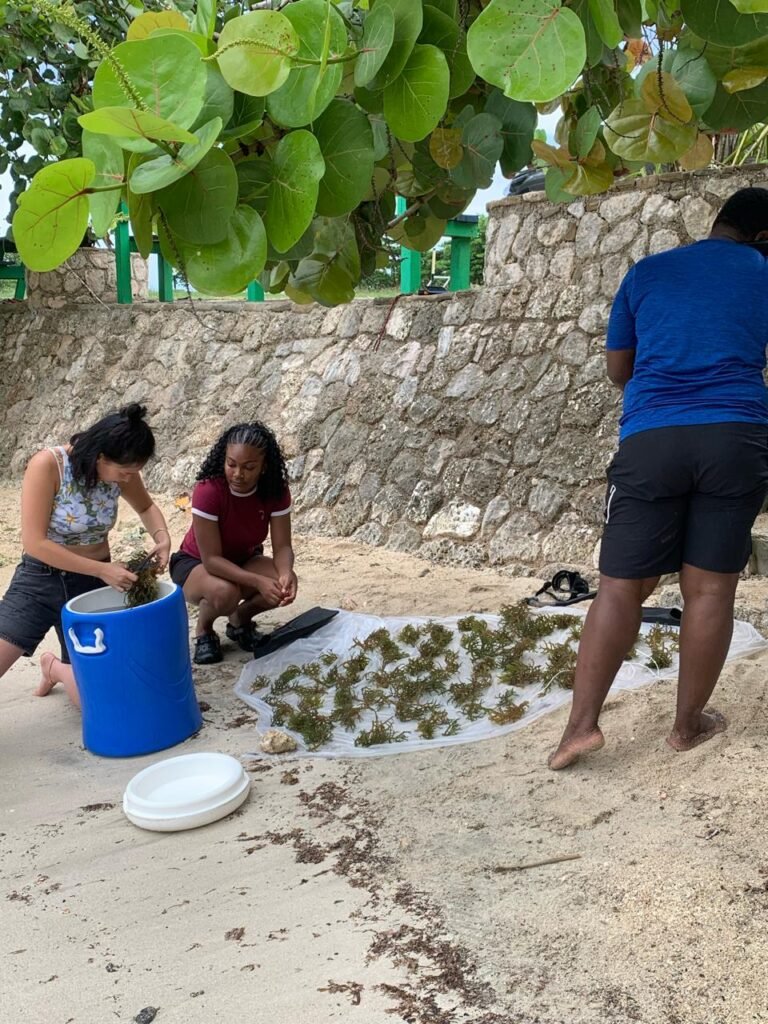
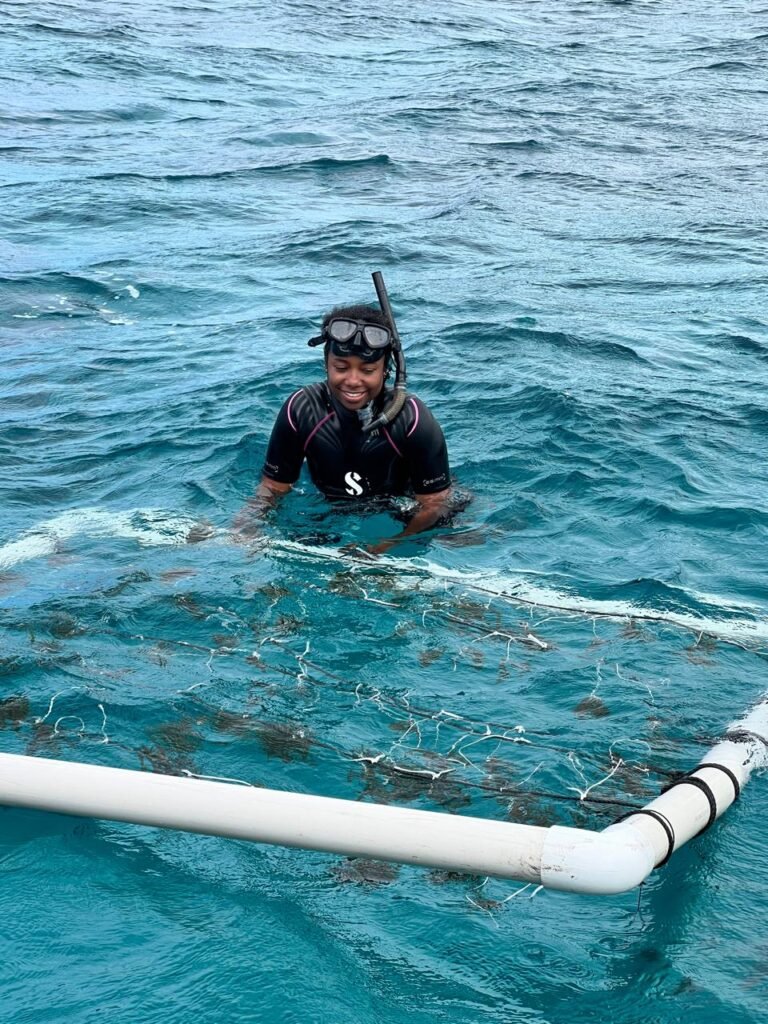
The EbA interventions carried out include active restoration, sustainable management, sustainable fishing, and a strong support on diversification of sustainable livelihoods.The coral restoration programmes focus mainly on the two (2) branching corals, Acropora cervicornes (staghorn), Acropora palmata (elkhorn), and recently placed efforts on restoring Acropora polifera.
Name of Protected areas where work is carried out
The Oracabessa Bay Fish Sanctuary is 90 hectares of a protected marine ecosystem. Support is received from other MPAs, including White River
Relevant climate risks
The main climate risks faced include storm surges, increased frequency of hurricanes, harsh weather systems, and increased sea temperatures
Relevant historical events
- Hurricane Melissa 2025 (CAT 5) – approximately 50% loss of coral nursery stock.
- Coral Bleaching Event 2022 /2023 – caused 100% loss to coral nursery stock.
- Unpresidented 'Freak' Storm resulting from a cold front in 2024 resulted in100% damaged or lost coral nursery infrastructure, land-based sea urchin nursery system was destroyed, damage to protected area floating dock.
- Global Mass Coral Bleaching event (2023). Live coral cover in the protected area reduced from about 12% to 2.8%. All the nursery grown Acrapora spp. corals experienced 100% mortality in the wild and in the nurseries. Subsequent to this event more resilient corals were sourced discovered in the wild and incorporated in the restoration program.
Socioeconomic impacts
The major economic activities in the inland areas of Oracabessa are Local commerce, transportation and infrasture and Agriculture. In the coastal areas the majoractivities are marine and coastal ecotourism and fisheries. Rising sea temperatures have lead to coral bleaching that impacts habitat structure and fish community structures, which impacts fisheries. Severe storms also damage fishing equipment that is used for reef fishing (fish traps) and also damage the reefs themselves, and causes coastal erosion that impacts fishing beaches. The loss of coral from reefs also impacts ecotoursim as reefs are a source of sand that replenishes beaches and the reefs are also an attraction for snorkeling and SCUBA diving. The impacts on tourism are signficant as it is a major sector within Oracabessa and Jamaica and so there are hundeds of people who’s livelihoods are impacted. The significant amount of fishers are older than 60 years old and so are vulnerable as they lack other skills to be able to find employment in other sectors and are also vulnerable due to their age. Among the fishers are also youth who rely on fishing as a livelihood when full time or seasonally when other employment in tourism and other sectors is not available.
Beneficiary communities and population/groups (direct and indirect) in relation to the intervention
Fishers, Residents (Including youth, women and men) and Farmers in Oracabessa and surrounding communities
Relevant vulnerable groups
Artisanal fishing families (Including older fisherfolk).